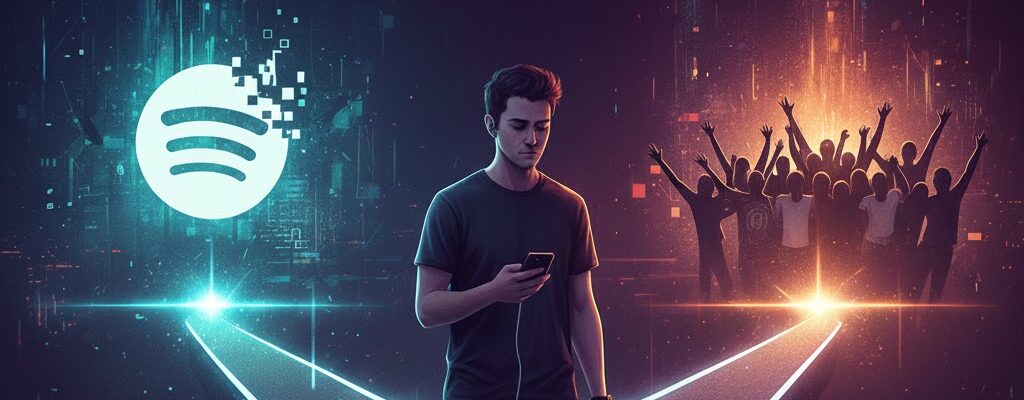
Over the past few years, more and more artists have grown increasingly frustrated with Spotify. Between hosting ICE ads, the rise of ghost artists, favoritism towards major label artists and the former CEO’s investments in military AI, it’s understandable why some artists feel conflicted about allowing the company to profit off their art.
Because of this, we’ve seen artists actively pull all their music from Spotify, with many more wondering if they should do the same.
What actually happens if you remove your catalog from Spotify? Can you still sustain a career without your music on the biggest music streaming platform in the world?
The short answer is yes, but it’s not without consequences.
In this blog, I’ll cover what impact taking your music off Spotify can have on your career and what steps you should take if you decide to go through with it.
What You Actually Lose Without Spotify
1. Streaming Revenue From the Largest Platform
This one’s obvious. Spotify is the biggest streaming platform globally, so pulling your music means losing a nice chunk of your streaming revenue. There’s no exact percentage, as it will vary between artists, but you can expect to lose out on at least a third of your streaming royalties. This is a rough estimate based on how much market share Spotify has for the U.S., but it can be more depending on the country your listeners are in and what platforms they use.
For example, Spotify represents around 41% of the streaming royalties for one artist I work with. 62% of their fan base is in the U.S., while 38% account for the rest of the world, including top countries like the U.K., Canada, Australia, Germany and other European countries.
For some artists, this is not going to matter much. Streaming already pays so little that their real income comes from shows, merch, brand deals or direct fan support. In those cases, Spotify revenue feels more expendable.
For other artists, every dollar matters, especially those who are fully independent. There are some who need their streaming royalties to survive, feed their families and continue to create the art they’ve been fortunate to live off of.
Before making any decision, you need to take a good look at your numbers and know how much Spotify contributes to your monthly or yearly income. Everyone’s situation is different, so see if you can afford to live without Spotify.
2. Spotify’s Discovery Engine
One of the big benefits of Spotify is its discovery engine. Their algorithmic playlists, like Discover Weekly, Radio and Mixes, help introduce your music to new listeners.
There’s also Discovery Mode, where artists can opt in specific songs to let Spotify push certain tracks more heavily in exchange for a 30% cut of royalties on those streams. It’s controversial for being pay-to-play (payola), but for some artists, it helps to drive more streams.
That said, if you’re a newer or developing artist without much of an existing listenership and catalog, losing Spotify’s algorithm won’t really affect you.
The good news is you still have access to other powerful discovery engines on social media, like Instagram and TikTok. As long as you’re posting regularly and engaging with fans on social media, you’ll do fine.
3. Listener and Music Data
Spotify for Artists provides a lot of useful data about your listeners and your music releases. For example, you can learn what the top cities and countries your fans are listening in, age groups, gender, types of listeners, individual song performance and even the source of streams.
This type of information can be used to make important business decisions for artists. One of the most popular use cases is for routing tours and booking shows based on the number of listeners in each city.
If you leave Spotify, you’ll still have data from other DSPs and social platforms. However, since Spotify is the largest, you’re losing access to one of the biggest pools of listener data available for your business.
4. Spotify Followers To Notify About New Releases
When you drop new music on Spotify, your followers will find it on their Release Radar playlist. That’s a built-in way to share new music with your listeners and fans without doing anything extra.
If you pull out from Spotify, you lose your followers and the ability to push new releases to them.
This is not a big deal because Spotify followers are siloed. You have no way to see who your followers are or message them directly. Similarly with social media, you don’t actually own that relationship either. But at least you can see who follows you on platforms like Instagram and TikTok while having the ability to communicate with them through comments or direct messages.
If you already have an email list or you’re active on social media, losing Spotify followers isn’t the end of the world. You have plenty of other channels for updating fans on new releases.
5. Show Promotion (Bandsintown Integration)
This helps to promote your upcoming shows to fans who may not be tracking you on Bandsintown, which is a big plus.
However, if you don’t play many shows or tour regularly, this feature won’t impact you much. And if your fans are already tracking you on Bandsintown, you’re still covered. Just make sure you have a link to your Bandsintown schedule in your link-in-bio page and on your website.
6. Shopify Merch Integration
If you use Shopify to sell merch on your website, Spotify lets you display your products directly on your artist profile< You can even link specific merch items to your releases so fans see them while listening.
In my experience, we’ll occasionally see merch orders come in from Spotify, but it’s nothing substantial. But of course, this will vary by artist.
If you don’t sell much merch or don’t use Shopify, this integration won’t matter for you. It’s a neat feature for artists who use Shopify, but not game-changing.
7. Editorial Playlist Pitching
Once you’re off Spotify and no longer push new releases to the platform, you lose the ability to pitch a new song to Spotify’s editorial team.
Getting a track on an editorial playlist can provide a nice bump in streams, discovery, and revenue, but it’s rarely something that makes or breaks a career. Not to mention,the odds of landing on an editorial Spotify playlist are already extremely low, considering over 100,000 songs are uploaded every day.
You can also pitch new releases for Amazon Music playlists, but it’s likely not going to have the same impact as on Spotify.
Pitching to Spotify editorial playlists is a nice feature, especially since it’s free, but it’s not essential for independent artists.
Should You Leave Spotify? Factors to Consider
The big question is, should you actually do it?
This is where things get personal. I fully understand that no amount of money or reach matters if it conflicts with your morals or ethics. At the same time, this is also a business decision. Streaming platforms may not pay well, but some independent artists rely on that income to get by. When a decision affects your livelihood, you owe it to yourself to be fully informed.
Ask yourself honestly:
- How financially dependent am I on Spotify?
- How strong is my direct-to-fan ecosystem?
- How loyal is my fanbase?
- What stage of my career am I in?
- What are my long-term goals?
Don’t let pressure from fans or other artists dictate your move. Some artists leave for moral reasons and to set an example. Others stay because they need the money to keep their business operating. There’s no judgment either way, so do only what makes sense for you and your family first.
If You Do Decide to Leave Spotify
Let’s say you decide to go through with it. What now? Here’s a list of steps and things to consider.
Contact Your Distributor
Spotify won’t remove your music directly, but your distributor can. You’ll likely need to contact your distributor’s support team to request removal.
The good news?You can always add your music back later.
Inform Your Fans
Never pull your music silently. That’s how you confuse and upset fans.
Give fans a heads up about your decision on socials and your email list. Briefly explain why, and let Spotify users know exactly how and where they can still access your music.
Suggest Another Streaming Platform
Most casual listeners won’t switch platforms for one artist, but loyal fans might. Do your research and only recommend platforms you actually feel good about supporting.
Offer Listening Alternatives
The fans impacted by this decision are going to be Spotify users, of course. Here are some alternative ways they can still listen to your music.
- Encourage digital downloads (Bandcamp): Bandcamp is hands down the best option here. Fans can buy and own your music and stream it through the Bandcamp app like they would on Spotify. The best part is that you get paid more for your music. I personally like Bandcamp because the platform and community there are very supportive of independent artists.
- Use YouTube as a free option: YouTube is universal, searchable, and free. You likely have your music distributed here in the form of art tracks when you uploaded your music for release. Almost everyone already uses it, so it’s a solid fallback for fans who won’t switch DSPs but still want access to your music.
- Sell USB flash drives with your music: USB or USB-C flash drives are a cool, collectible option. Fans get files they own forever, and it adds a tangible, meaningful layer to the fan relationship. If fans have a newer smartphone with a USB-C connection, they can just connect the flash drive to their phone and transfer the files over. The big drawback is that music files can take up quite amount of space and be a little more inconvenient to use.
- Sell physical music formats (Vinyl & CDs): Although this option can be the most profitable for you, it’s also the furthest away from what Spotify users are used to when listening to your music through a phone app. Still, this should be mentioned as an option as one of the best ways to support you and your music in this situation.
Consider a Middle-Ground Option
For a lot of artists, taking down their entire catalog from Spotify is not an easy financial choice. What some artists will do instead is leave their previous releases on Spotify, but no longer release new music there. This keeps some revenue and discovery flowing while funneling fans towards platforms, options and channels where artists can better monetize their music.
Reinforce Fan Communication Channels
When you lose the features and benefits of Spotify, you should strengthen other areas of your marketing and communications with your fan base.
Encourage fans to:
- Track you on Bandsintown
- Sign up for your email list
- Join your Instagram Broadcast Channel
- Favorite your Instagram account so your posts show up more often
- Follow you on Bandcamp
When you don’t own your fan relationships on Spotify or even social media, it’s always a good idea to have multiple ways to reach them.
Conclusion
Yes, artists can survive without Spotify. It may be the biggest music streaming platform, but it does not have a monopoly over your career. You still have other platforms and channels that can supplement what Spotify can offer.
This is not to say it won’t be inconvenient for you and your fans, but being able to adapt as an independent artist is a valuable skill to exercise. In an ever-changing technological landscape, this is likely not the last time you’ll have to learn to make adjustments to how you operate.