If you only had $1,000 to promote a song as an independent artist, how should you spend it? In this blog, I’ll break down the approach I recommend based on what is most cost-effective in 2026.
Regardless of whether you’re a developing or established artist, the main goal here isn’t to rack up Spotify streams. Instead, the focus is on maximizing reach for discovery and brand awareness while building your social media following. Why?
Because growing a real audience is the foundation you need before streams, playlists or press can have any lasting impact. You want the ability to directly connect with potential fans so you can nurture those relationships to monetize later. That’s how you build a supportive fan base.
For the established artists, it’s important to regularly attract new eyes and ears to bring them into your marketing funnel. Having super fans is great, but business-wise, it can be challenging to sustain your career without bringing in new fans/customers regularly.
This plan won’t fit every type of artist or genre perfectly, but it should serve as a good starting point to figure out your content strategy.
The $1,000 Breakdown
- $600 → Short-form video content creation
- $400 → Social media ads (reserved only if a video pops off organically)
That’s it. Simple, clear and effective. The approach is a combination of organic posting and the smart use of paid media.
Why Content Comes First ($600)
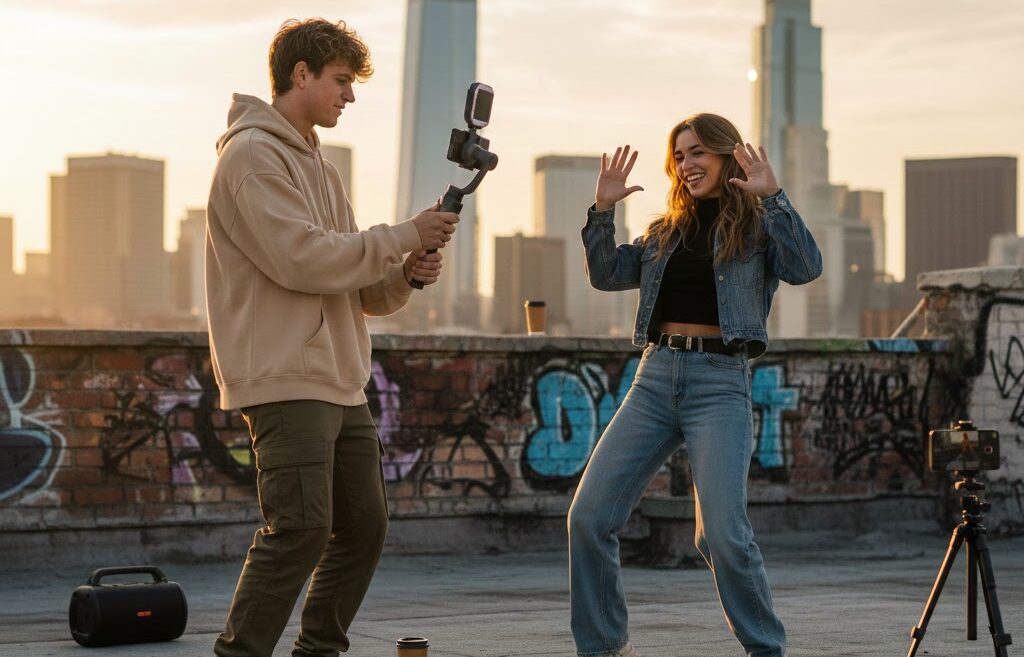
Content is the core of this promotional plan, specifically video. Short-form video (think TikTok, Instagram Reels, YouTube Shorts) is the number one way people discover music today, especially for younger generations. These platforms are discovery engines that help push your content in front of new potential fans.
Many artists hate the idea of creating content, but the reality is that content has been key in promoting artists and their music, even before social media existed. From a marketing perspective, most online attention is on social media, so it only makes sense for artists to prioritize social media to build and grow their careers.
So if you’re serious about promoting a song and getting discovered by new people, you will need plenty of short-form video clips to post.
Here’s how I’d spend the $600:
- Hire a videographer if possible: See if you can find a local freelancer or someone looking for more experience with video who can do a video session for about $200 – $300 a session. For each shoot, aim for 2 to 4 hours at 2 or 3 locations. Within those locations, you’ll use different areas, angles, and backgrounds to give yourself more variety in your videos.
- Do multiple full song takes: Perform the song live or lip-sync it, just like you would in a traditional music video. Make sure to practice and rehearse beforehand so you can maximize your time shooting, especially if working with a videographer.
- Create volume: Chop up those takes into different clips. You can create a clip of the verses, chorus only, verse + chorus, bridge into chorus, or even a few standout lines within a verse. These clips can range from 10 to 90 seconds. If done right, one shoot can easily yield 20 to 40+ usable pieces of short-form videos.
- Switch things up: For each new location, bring outfit changes. Experiment with different camera angles, editing techniques, props or other actors to give you even more variety.
- Add text captions over the video: A lot of people scroll their news feed with the sound off. Using text on the video is one good way to catch someone’s eye and stop the scroll. This can be text captions of the lyrics as you’re performing them, or you can also use a text hook. Your hook should either signal who the song is for, communicate what it’s about, or intrigue the viewer to watch more. Some artists may choose not to use any text, and that can work perfectly fine too.
To learn more about creating short-form videos and what type of video you should be creating, check out this blog here.
After your first shoot, you should have a full month’s worth of daily content. Maybe even more if you post only on weekdays and recycle clips with new captions or hooks.
For posting on Instagram, you can use the new trial reels feature to test content. Posting a reel as a trial will only show it to non-followers to see how it performs before deciding to make it public on your profile and share it with the rest of your followers.
What if you can’t hire a videographer?
Use the $600 to invest in equipment: a tripod, lighting, and maybe editing software. Your smartphone camera is more than good enough, especially if you have one of the newer iPhones or Samsung Galaxies. Ask a friend to help shoot if needed. The key is consistency, not fancy production.
If you are shooting your own videos, check out this blog.
When to Use Ads ($400)
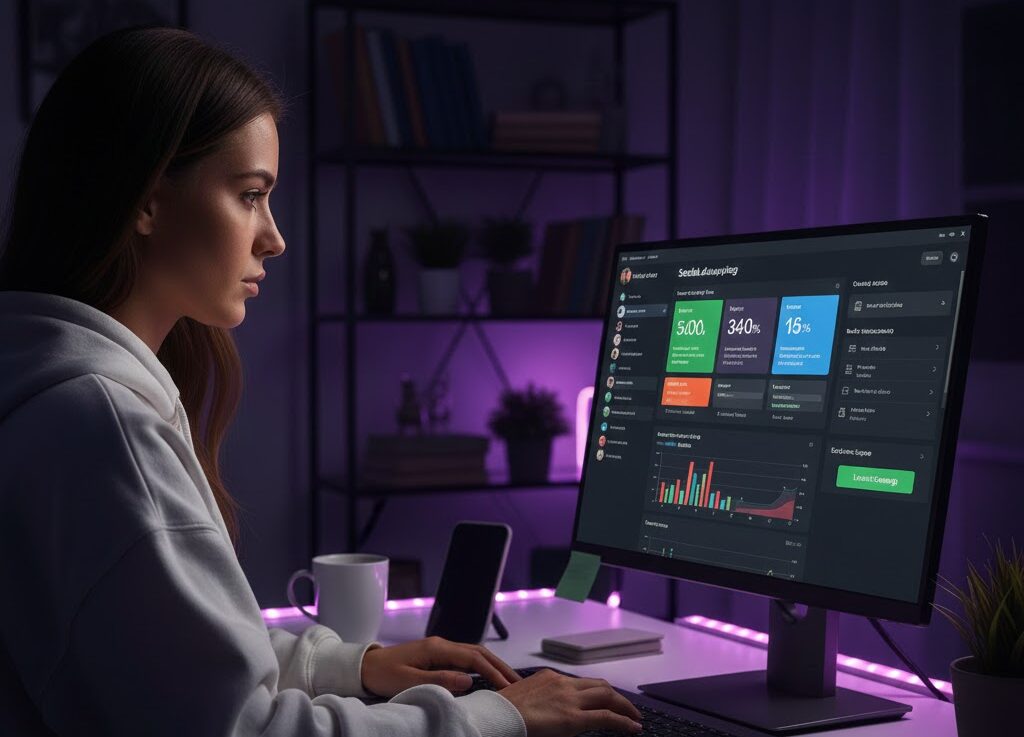
The remaining $400 is strictly for ads, but there’s a catch. You don’t spend it unless one of your videos starts taking off organically.
Think of ads as “fuel for the fire.” If a clip is already working well on its own, boosting it will amplify its reach and impact. Otherwise, spending ad money on a video from the beginning without trying it out first is a risky gamble.
Since we’re on a limited budget and you can test it for free, it makes sense to put money behind a video once you know it works as an organic post.
Here’s the step-by-step process:
- Post your first batch of 20–30 clips daily (or weekdays only). Once a day is fine.
- Watch the numbers carefully: If a clip shows strong engagement numbers or signs or signs of virality, consider putting $100 – $200 behind the video.
- Keep stacking: If a second video also does well, put another $100 behind it. You’ve got up to four shots with that $400.
- Keep the momentum going: If a video goes viral and attracts followers, use another $300 to create a fresh batch of videos for the same song, in new locations or with new visuals, to keep the momentum alive.
What If Nothing Pops?
This is important: not every song is going to hit, and that’s okay. It may take posting multiple videos for months and experimenting with different songs to start seeing traction. Remember that what’s considered “good” music is subjective, so there’s no way any strategy is guaranteed to work right away.
If none of your clips take off after the first $300 session, don’t panic.
Here’s how to pivot:
- Use the second $300 for a new batch of videos, but this time for your next song.
- Keep the $400 in reserve for ads, in case something from the next batch pops.
- What about the first batch of videos? Keep posting them on Instagram as a ‘trail reel.’ This is a useful tool for creators to see how your videos perform for non-followers without having the video visible on your profile. However, you can’t post it exactly as you did before so you’ll need to change it up and experiment with different captions or text hooks.
- If the second song doesn’t move the needle, repeat the cycle with the third. Shoot another batch of videos and you should have $100 left over for ads.
Newer artists often need several songs before something resonates with an audience. It doesn’t mean your music sucks, it just means you’re still developing and experimenting. The problem is not the algorithm. Having the self-awareness and patience to not let poor responses to your videos affect your consistency will give you the best shot of finding success.
What About Playlists, Music Blogs, Radio or PR?
I wouldn’t spend money on any of these with a $1,000 budget. Here’s why:
- Playlists: Other than pitching to Spotify’s editorial playlists (which is free and worth doing), I wouldn’t pay for any playlisting services. Legit services can be expensive and it usually won’t build a fanbase. Streams and followers are siloed on their respective platforms, so you can’t reach directly to listeners… at least for now. Plus, there are a lot of playlisting scams. It carries some risk if your song lands on a botted playlist with fake streams.
- Music Blogs: We no longer live in the 2000s. Blogs aren’t how most people discover music anymore. Sites like SubmitHub or Groover can be fine to submit your songs for feedback, but don’t expect them to break your career.
- Radio: A majority of Americans still listen to the radio, but it’s a high barrier of entry and radio pitching services can be expensive. Unless your song goes massively virally and crosses over into the mainstream/traditional media, most songs aren’t going to be the right fit for radio programming on the popular stations where you would ideally want your music on. Of course, there are smaller local or college radio stations. But in my experience, it’s not cost-effective compared to what you can achieve on social media.
- PR Campaign: Hiring a publicist is costly, and even if you land a feature in a big outlet, it won’t necessarily move the needle for your business at this stage. Getting coverage on Rolling Stone isn’t going to transform your career.
With limited resources, your focus should be squarely on creating content that reaches people where they already discover new music, social media. It’s also very cost effective and highly scalable.
Scaling the Plan
$1,000 might feel like a lot for a new or developing artist. But you can scale this plan down:
- $500 budget: $300 for content, $200 in reserve for ads.
- $250 budget: $150 for DIY content (tripod, lighting, editing apps), $100 for ads if something works.
The same logic and steps apply, but in smaller chunks.
Final Thoughts
Promoting your music and building real traction is one of the hardest parts of being a developing artist. If you’re not regularly performing live and reaching new listeners in person, your next best opportunity is on social media, specifically through short-form video. It’s been the engine behind breakout artists of all types for years, and it’ll remain essential heading into 2026.
Here’s a recap. If I had $1,000 to promote a song:
- $600 → Shoot short-form performance videos
- $400 → Keep in reserve for ads if a clip takes off organically or goes viral
No playlists. No blogs. No PR. No radio. Just consistent, engaging video content and smart use of ads.
Social media, especially video, is the most cost-effective way to promote your music and develop your brand. A playlist can expose someone to a new song, but a video can communicate a lot more about you. And at the end of the day, you don’t just want listeners who stream some of your songs or buy a vinyl record. You want fans who will recommend your music to their friends, show up to your live shows every time you’re in their city and buy merch regularly to support your career long-term.
Remember, the goal isn’t to inflate vanity metrics like streaming numbers. You want to grow your audience and fans who connect deeply with you as an artist and brand. That’s how you build a music career that lasts.